

DEEP FAKE: Ghost in the Machine — notes from the first sharing in Japan

At Showa University of Music, Yuri Hall, on 22 May, we presented the first work-in-progress sharing of DEEP FAKE: Ghost in the Machine, a new UK-Japan dance, music and AI collaboration between myself, K2CO and Japanese composer and media artist Hiroyuki Nakamura.
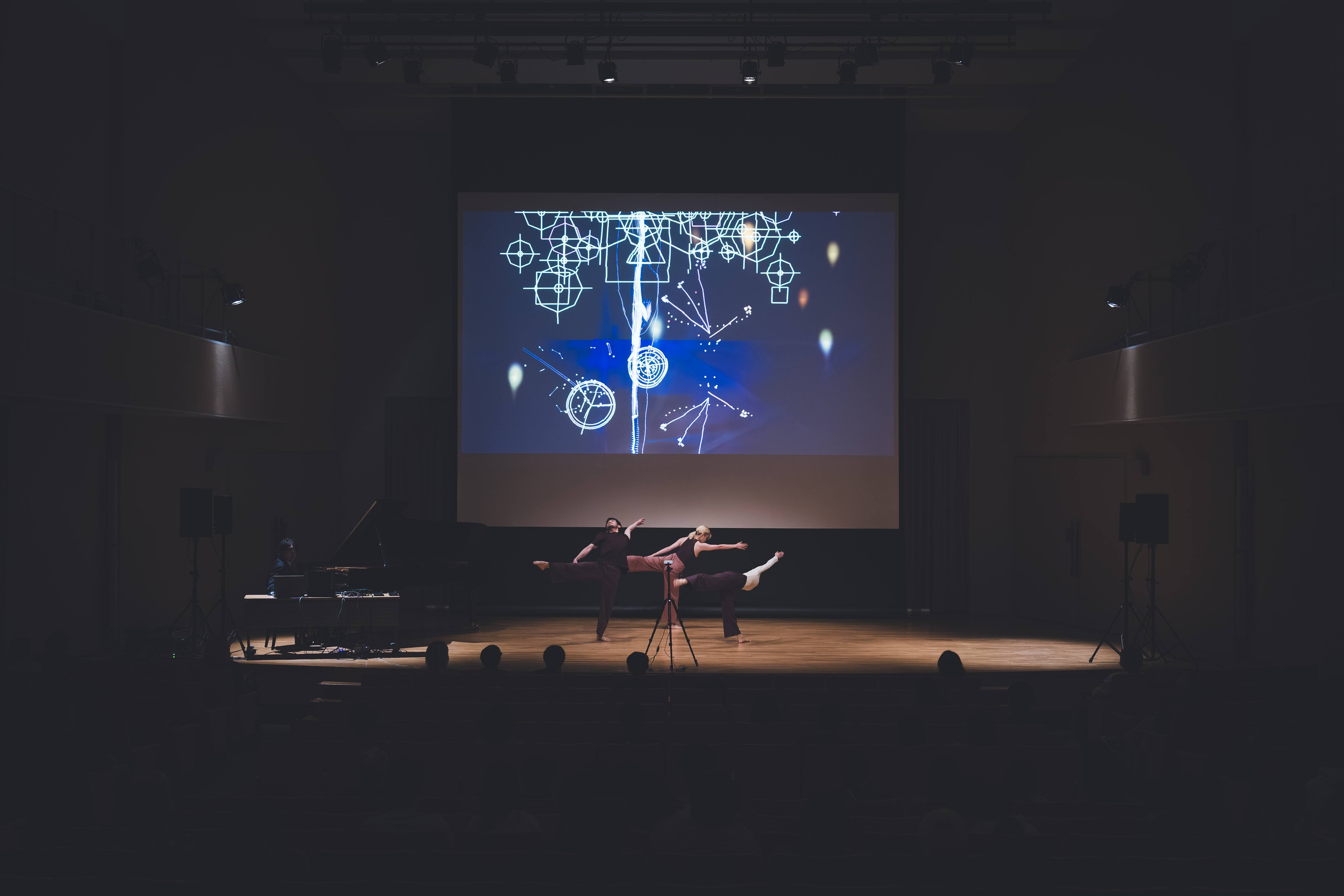
It was important to say from the outset that this was not a finished production. It was not even a draft of the final narrative. It was the opening of a laboratory: three sets of movement, music and AI studies, made quickly with three extraordinary Japanese dancers, live piano, electronic sound and AI-generated images responding to the dancers’ movement.
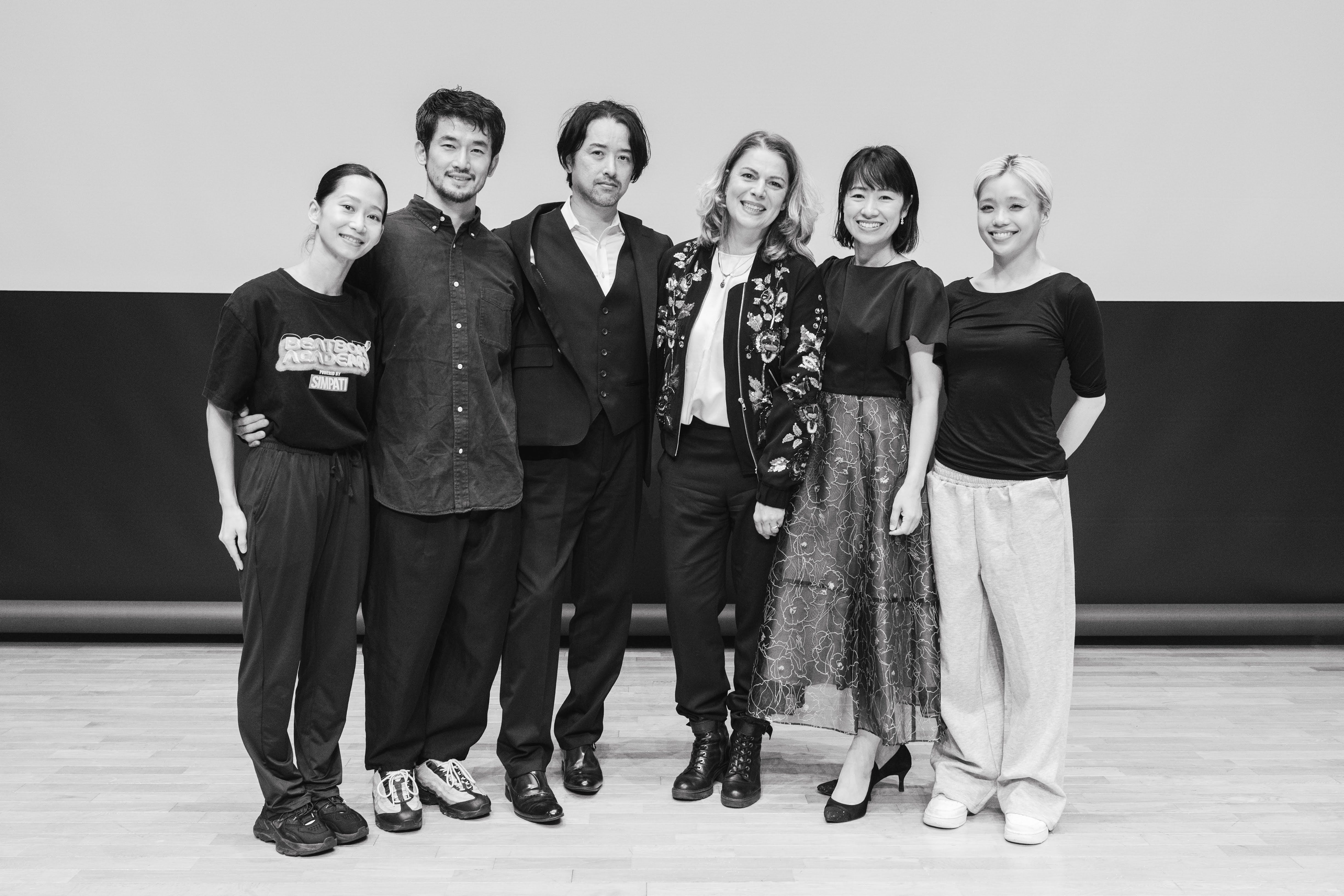
From L-R, Saaya Takaoka, Satoshi Nakagawa, Hiroyuki Nakamura, Rosie Kay, Mayumi Taguchi and Yuko Shimoji. Photographer Takahiro Kosaka (@solinity)
The larger work is concerned with identity, artificial intelligence, digital cloning and the digital self. In time, I am interested in developing a fuller theatrical world in which a human being’s digital copy becomes more powerful, more persuasive and perhaps more accepted than the original person. But at this early stage, we are asking more fundamental physical questions: what happens when the body is mapped? What happens when movement becomes data? What happens when technology begins to mirror us, distort us and answer back?
I come to this project as a choreographer, not as a technologist. Hiro is working with musical intelligence, technological intelligence and artificial intelligence. I am working with the body: breath, weight, instinct, emotion, physical memory and the accumulated intelligence of dancers. The meeting point between these two forms of knowledge is the territory of DEEP FAKE.
In my introduction, I described the work as something that is not simply about “fake news”, lying politicians or disinformation. Those are part of the climate we are living in, but they are not the full question. Deep fake technology points towards a larger instability: a fight over what now constitutes reality. What do we trust; the body, the image, the machine, the data, the performance, the memory?
As a choreographer, my material is the body. But dance and bodies are far more than motion. Dance is spirit, health, energy, emotion, vitality, exhaustion and storytelling. A dancer is not an image, a file or a clean digital object. A dancer sweats, tires, hesitates, listens and adapts. The dancer is trained, but not mechanical. The dancer is disciplined, but not merely controlled. That is why I think dance has something crucial to offer the AI debate.
So much public discussion around artificial intelligence happens through language, law, ethics, economics and technology. These are necessary discussions. But the body is often missing from them. What does artificial intelligence mean for the body? What does it mean for presence, for touch, for failure, for human timing, for ambiguity, for the difference between a living person and a convincing representation of one?
The first section of the sharing was called The Mapped Body. It explored the body scanned, tracked and translated into data. The idea of mapping is central to the project because mapping is never entirely neutral. To map something is to claim a form of knowledge over it. A map tells us where something is, how it moves, what can be measured, what can be repeated and what can be controlled.
Professor Takayama of Showa University of Music, who wrote a generous and intellectually substantial response to the sharing, understood this immediately. He described the work-in-progress as “deeply engaging, stimulating both intellectually and aesthetically.” He wrote that the theme of Part 1 was “the mapped body”, and that today “the human body is scanned with high precision, replaced by digital data, mapped as positions in space.” He then asked, “How does a person feel and react when confronted with this data?” For him, “that question is what the work makes visible.”
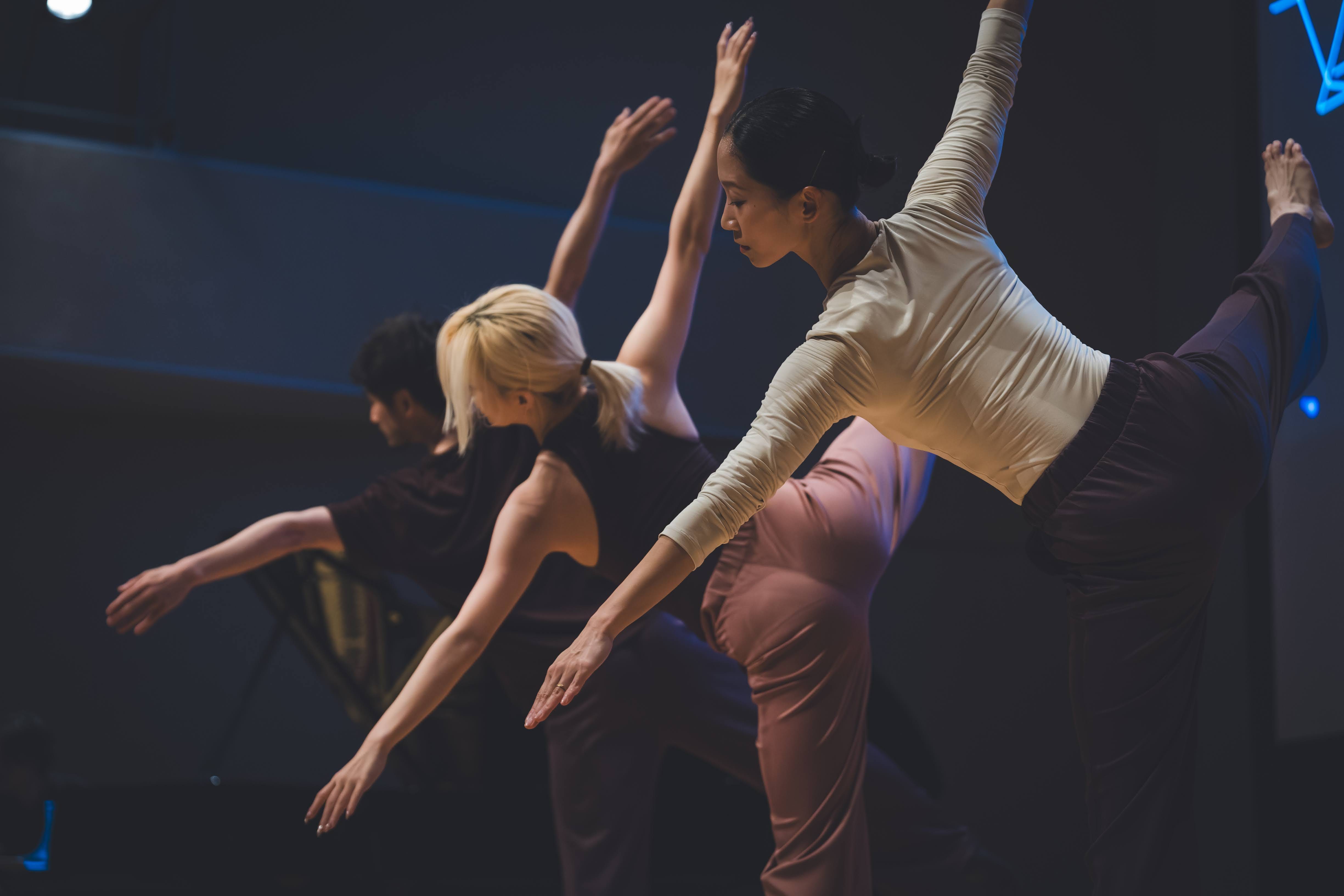
I was struck by the precision of that response, because this is exactly what we were trying to discover. We were not demonstrating a technology. We were trying to make visible the felt experience of being read, measured and returned to oneself as data. The three dancers; Satoshi Nakagawa, Yuko Shimoji and Saaya Takaoka, approached this with great intelligence. Because I was working with a hip injury, I could not demonstrate physically in my usual way, so much of the material was generated through tasks, images and states. The dancers were not copying me; they were generating the language of the work from inside their own bodies.
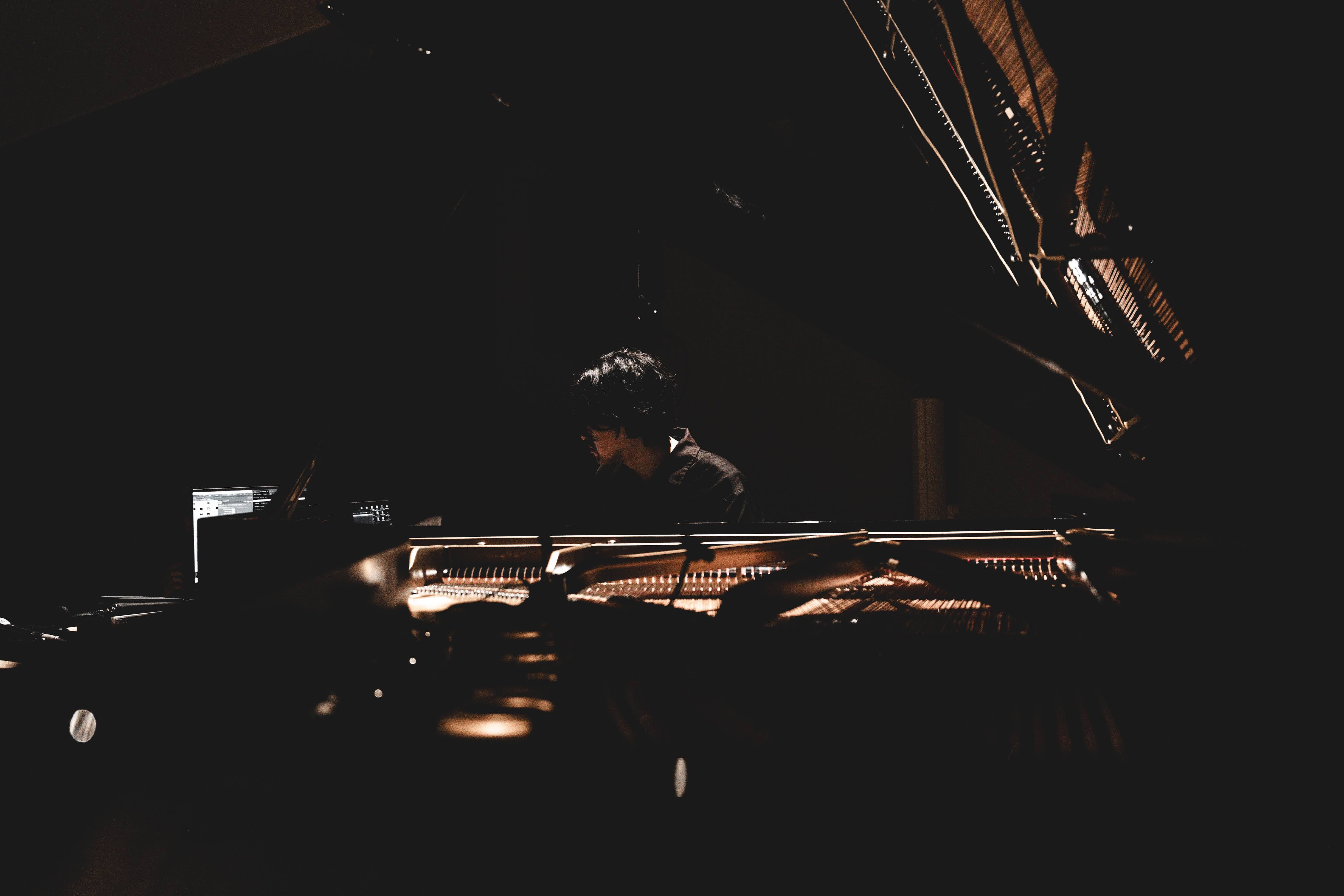
Professor Takayama then made a connection that I found particularly fascinating. He wrote that “the relationships; Nakamura and the piano, the dancer and the choreography, already contain within them the problem of mapping and the freedom from it.” The piano itself, he suggested, is a kind of mapping system: the black and white keys, the vast range of the concert grand, the organisation of musical possibility into a spatial and mechanical structure. Yet he also noted that Nakamura’s delicate touch and improvisational technique pull the piano back towards something “organic and ambiguous.”
He saw the same structure in the dancers. Choreography is also a form of mapping. Trained dancers objectify their own bodies, place themselves in space, repeat movement, follow instruction, hold form and negotiate timing. But, as he beautifully wrote, “they don’t stop there; they step further, giving it, so to speak, flesh and blood.” That phrase has stayed with me because it articulates something I believe deeply about dance. The dancer enters structure, but the living body exceeds structure. Technique maps the body; performance returns it to life.
The second section of the sharing explored Control, Emotion and Glitch. This comes from a long-standing area of my choreographic research: systems of control and how they enter the body. In 5 SOLDIERS and 10 SOLDIERS, I worked closely with the British Army to study training, discipline, injury, group behaviour and the physical reality of combat. In MK ULTRA, I examined pop culture, conspiracy, mass influence and the tension between freedom and control. With DEEP FAKE, that research moves into the digital realm. The system is no longer only military, cultural or social. It watches the body, copies it, predicts it and may eventually replace it.
In Part 2, loops, odd-numbered rhythms, digital interruptions and error-patterns created a world in which the dancers seemed to be both inside and against the system. Professor Takayama wrote that “digital error is taken as something positive,” connecting this to the music of the 1980s, new wave and early postmodernism, when the digitised or cyborg body could be imagined as a liberation from “blood, flesh, and sweat.” He asks a very sharp question: “now, in the 21st century, required to live ever more inescapably within the digital ocean, what is it we delight in? What do we take as pleasure?”
That question is exactly where the work becomes contemporary rather than nostalgic. There was a moment when the digital world seemed to promise escape: from the body, from hierarchy, from old forms, from limitation. But we no longer stand outside the digital world imagining entry into it. We live inside its systems. We are observed by them, shaped by them and increasingly represented by them. The glitch, therefore, is no longer simply a playful error. It may be a form of resistance, or a sign of breakdown, or a reminder that the human body never fully submits to clean information.
The third section was Demons: Another World. During my time in Tokyo, I visited the Tokyo National Museum and was struck by images connected to the Night Parade of One Hundred Demons. I have long been interested in medieval depictions of the underworld, Dante’s Inferno, apocalyptic imagery and the way human cultures create figures for unseen forces. This does not mean that I think AI is literally demonic. Rather, I am interested in the theatrical and imaginative question: when we summon images, voices, doubles and simulations through machines, what kind of “other world” are we creating?
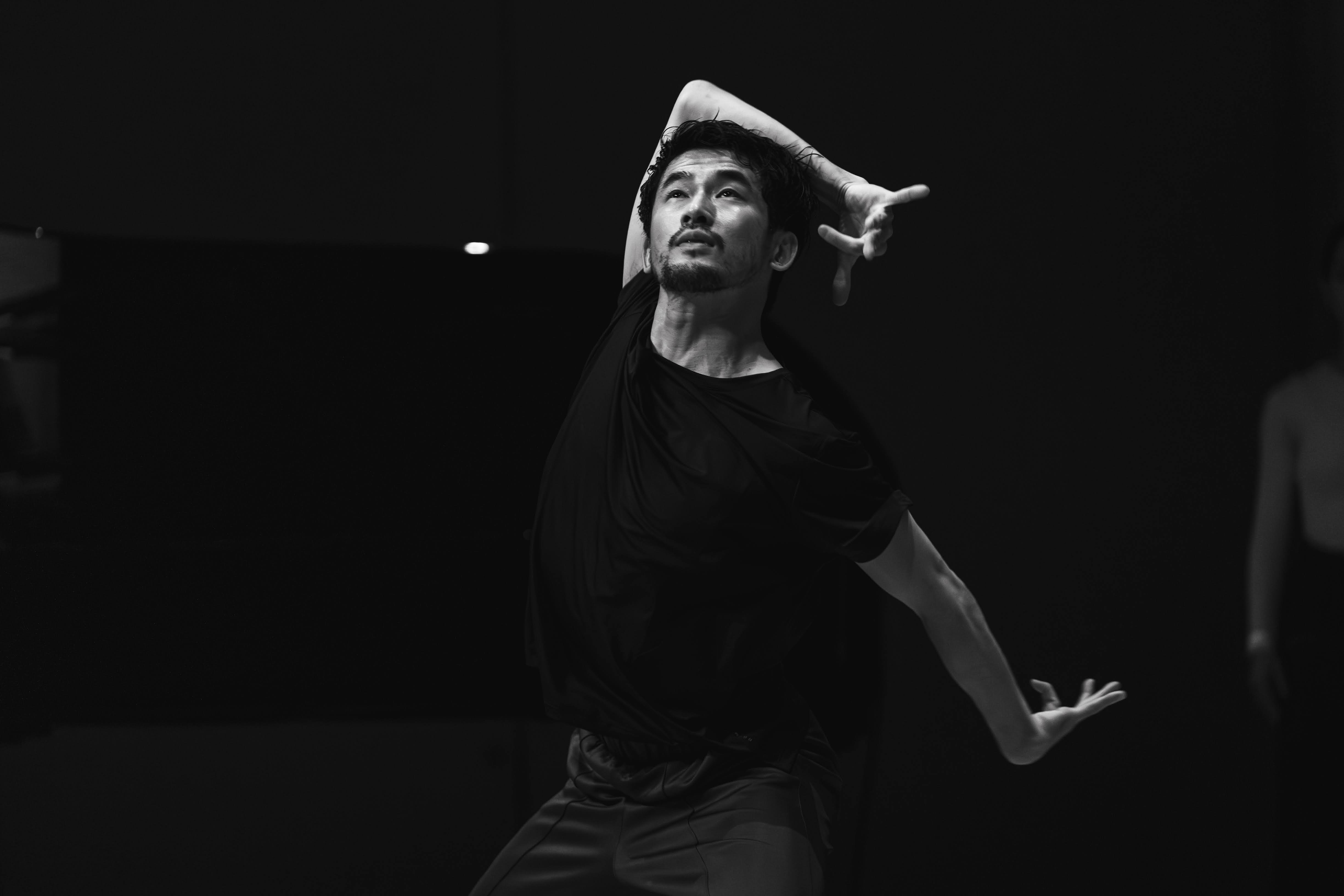
Professor Takayama read this final section as a movement into the monstrous. “The world that is mapped and observed by AI eventually gives birth to something monstrous,” he wrote. “And yet the work neither laments this nor denies it.” I found that important because I do not want DEEP FAKE to become a simplistic warning against technology, nor a naïve celebration of it. I am interested in the more difficult space between fascination and fear. The work asks what we are unleashing, but also whether this is unprecedented or part of a much older human story: our tendency to invent new realities and then live inside them.
That is why the ancient, medieval and mythic references matter to me. Human beings have always made systems for explaining the invisible. We have imagined automatons, demons, witches, gods, ghosts, angels, monsters and machines. We like to think of ourselves as rational modern subjects, but our own age has its invisible powers too: algorithms, surveillance networks, synthetic images, digital twins, AI systems that classify, predict and produce. Technology has not abolished myth. It may have given myth new instruments.
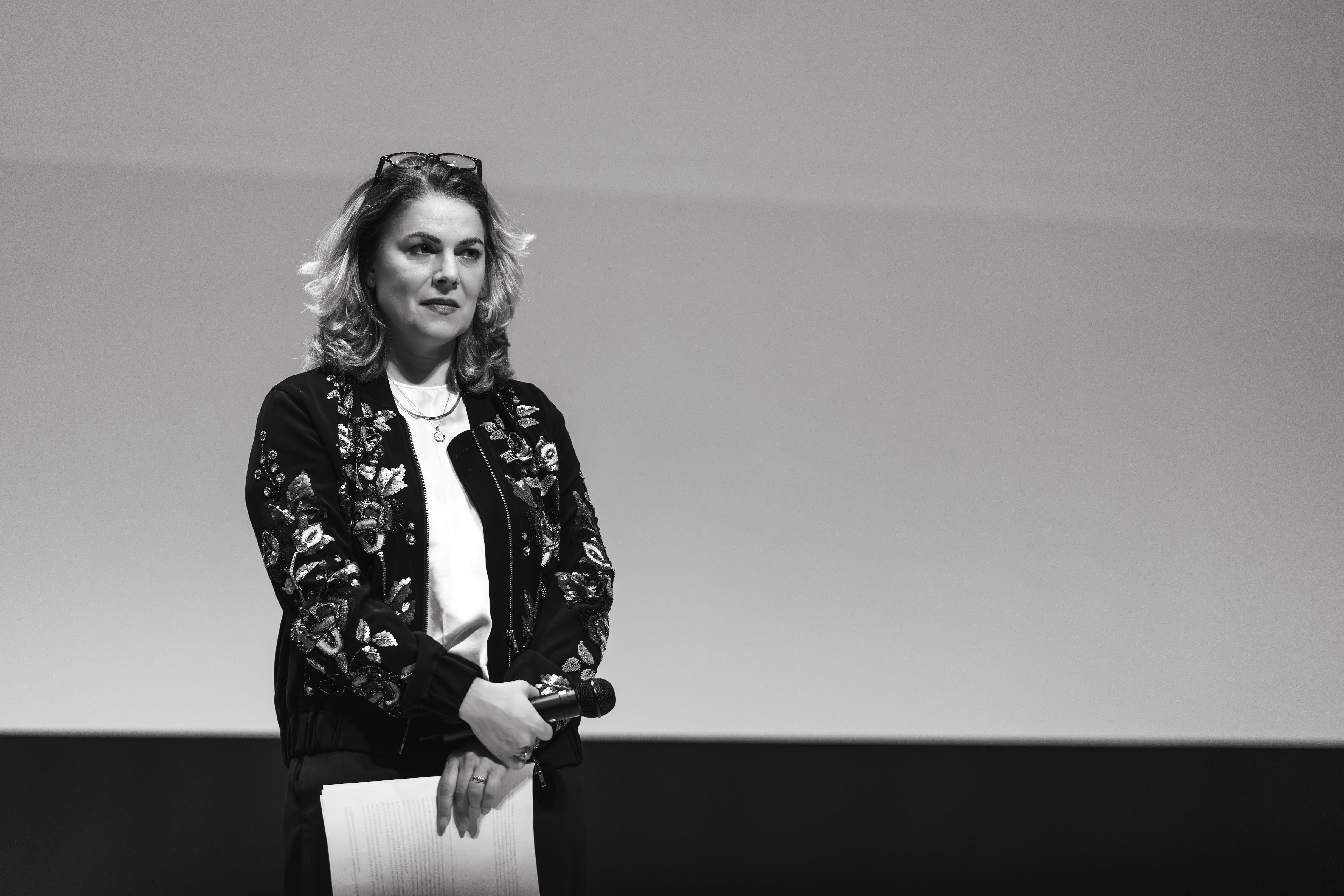
The most moving part of Professor Takayama’s response was that, while he understood the seriousness of the subject, he did not reduce the work to its themes. He wrote: “Even while dealing with cutting-edge problems — serious ones that have already become concrete threats to life — the work was, throughout, beautiful. I enjoyed that beauty.” This matters to me. Beauty is not a decorative extra, nor a distraction from difficult thought. In dance, beauty can be a form of concentration. It allows us to look more closely, not less.
What we shared at Showa University of Music was only a beginning. It was made quickly, with dancers I had only just met, in collaboration with Hiro’s live and digital systems, and with the generous support of the Composition Department, Beyond Boundary Music, Arts Council England and The Great Britain Sasakawa Foundation. Yet the response suggested that the central questions of the project are already legible: the mapped body, the copied body, the human inside the system, the glitch, the digital double, the monstrous and the beautiful.
The next stage will take this research into a UK development period, where Hiro’s technology and compositional systems will meet my UK company dancers, with the possibility of bringing some of the Japanese dancers into the next phase. From there, we hope to build towards a fuller UK-Japan production.
For now, I am left with Professor Takayama’s phrase: “the problem of mapping and the freedom from it.” That may be the clearest description so far of what DEEP FAKE is beginning to explore. The body is mapped, trained, watched and translated. Yet in performance, it still exceeds the map. It gives the system flesh and blood. It insists that the human being is not only data, not only image, not only copy.
That is where the work begins.
CREDITS
DEEP FAKE: Ghost in the Machine — Credits
Showa University of Music, Yuri Hall — 22 May 2026
Lecturers: Hiroyuki Nakamura (Composer / Media Artist) & Rosie Kay (Choreographer, Artistic Director / K2CO Ltd)
Choreography: Rosie Kay
Music, Composition & Interactive Sound System: Hiroyuki Nakamura
Dancers: Satoshi Nakagawa, Yuko Shimoji, Saaya Takaoka
Sound / PA: Kazuki Terabe & Matoba (Preludio Inc.)
Host / MC: Mayumi Taguchi (BBM)
Interpreter: Utami Matsuoka
Photography: Takahiro Kosaka (@solinity)
Presented by: Composition Department, Showa University of Music
Production: Beyond Boundary Music (BBM)
Co-production: K2CO Ltd
Supported by: Arts Council England & The Great Britain Sasakawa Foundation
I'll be in Japan in October and if your show is on I won't miss it. Love your work. Love your fierceness. Much support from Australia